Below is an annotated bibliography few of my articles:
Stephen, A. (2023, February 1). Digital Twins ain’t no Doppelgängers. Civil + Structural Engineer Magazine. https://csengineermag.com/digital-twins-aint-no-doppelgangers/
The article begins by discussing the concept of doppelgangers and how it relates to the idea of Digital Twins. It points out that while doppelgangers are often seen as rare, there is a significant chance of encountering exact lookalikes in a world with a large population. This leads to the author’s main point that Digital Twins, despite being a popular and sometimes misunderstood term, are not as mysterious as they may seem. The article defines Digital Twins as virtual representations of real-world entities and processes, synchronized at a specified frequency and fidelity. It emphasizes the importance of considering end-users, whether human or software, when evaluating the accuracy of Digital Twins. The author delves into the world of engineering and quality management systems (QMS), highlighting that most engineering work products are still analog artifacts, even in a digital age. They point out the gap in QMS when digital models are not considered legal documents, leading to potential issues in construction projects. The article introduces the concept of creating virtual representations of assets and processes using Bentley Systems’ iTwin platform, which helps bridge the gap between physical infrastructure and digital models. Federation and synchronization, common practices in the Architecture, Engineering, and Construction (AEC) industry, are explained in the context of Digital Twins. The article stresses that successful Digital Twins should not only represent assets but also mirror real-world processes. It uses the example of mapping QMS processes from the analog to the digital world, emphasizing the importance of Quality Control and Quality Assurance. In conclusion, the article demystifies Digital Twins by highlighting their practical applications in the engineering and design fields. It emphasizes that Digital Twins are not mystical concepts but rather representations of assets and processes that facilitate access to crucial information for everyday use.
Stephen, A. (2022, September 7). Yes, we are all Innovators Anand. BIM Summit. https://issuu.com/bimcoordinatorsummit/docs/bcs22_magazine/84
The term “innovator” has recently become overused and glorified, discouraging every day innovators. The author suggests a more moderate stance on the word and aims to awaken the inner innovator by de-fetishizing it. They emphasize the need for collective innovation in the Architecture Engineering and construction (AEC) industry to solve complex problems efficiently. The author argues that we often attribute innovations to single individuals, but in reality, they result from interconnected minor innovations. Elon Musk, for example, acknowledges the contributions of many others to his innovations. The goal is not to diminish the value of crucial innovators but to encourage everyone to become innovators by devaluing the term. The word “innovator” traces its origins to the Latin verb “innovare,” meaning “to renew, restore” or “to change into new.” AEC professionals inherently innovate by changing materials and creating something new or restoring it. The author advocates for a shift in mindset, emphasizing that we all must collectively become innovators to address unprecedented challenges. They propose two ways to awaken the inner innovator: learning shamelessly and listening empathetically. The author’s story of their grandmother teaching them Calculus showcases the value of shameless learning and empathetic listening. Their grandmother’s example of learning purely for the joy of it and looking up unfamiliar words in the dictionary serves as a lesson in shameless learning. Additionally, the experience of listening to her problem-solving methods demonstrates the importance of empathetic listening. In conclusion, the author encourages individuals in the AEC industry to embrace a more moderate view of innovation and to become innovators by rediscovering the joy of learning and listening empathetically. These approaches can help solve complex problems more effectively and make innovation an everyday practice.
Stephen, A. (2021, May 1). Shifting the Needle: Increasing BIM adoption for Horizontal Infrastructure Design, a Long-range View. Civil + Structural Engineer Magazine. https://online.flippingbook.com/view/618715940/35/?sharedOn=
Leverage is crucial for achieving more with fewer resources in the infrastructure industry. Building Information Modeling (BIM) adoption in horizontal infrastructure design is essential to address existing deficits. We can increase BIM adoption by incorporating information modeling principles and data exchange standardization in engineering education. Embracing open-source initiatives can also unlock the untapped potential of existing infrastructure data. By adopting these strategies, the engineering community can work towards more efficient and sustainable infrastructure development.
Stephen, A. (2021, February 4). A Case for Computational Design: A Systems Perspective. AUGIWORLD. https://issuu.com/augi/docs/aw202102hr
Computational Design is vital to developing resilient systems and should become part of our toolbox. Comparing a simple system above shows us the importance of adding a computational design to our toolbox. It dramatically minimizes the steps required to respond to an external force. The difference gets even more exaggerated when the complexity of the system increases. Through an example, the author illustrates a systems approach. Users can classify the report as the output, the steps to accomplish the task as resources, and the change in topography as an external impact on the system. A resilient system responds to changes by consuming fewer resources without altering the form of the system.
Stephen, A. (2020, November 1). Empowering a Paradigm Shift: MicroStation to Civil 3D. Autodesk University. https://www.autodesk.com/autodesk-university/class/Empowering-Paradigm-Shift-MicroStation-Civil-3D-2020#handout
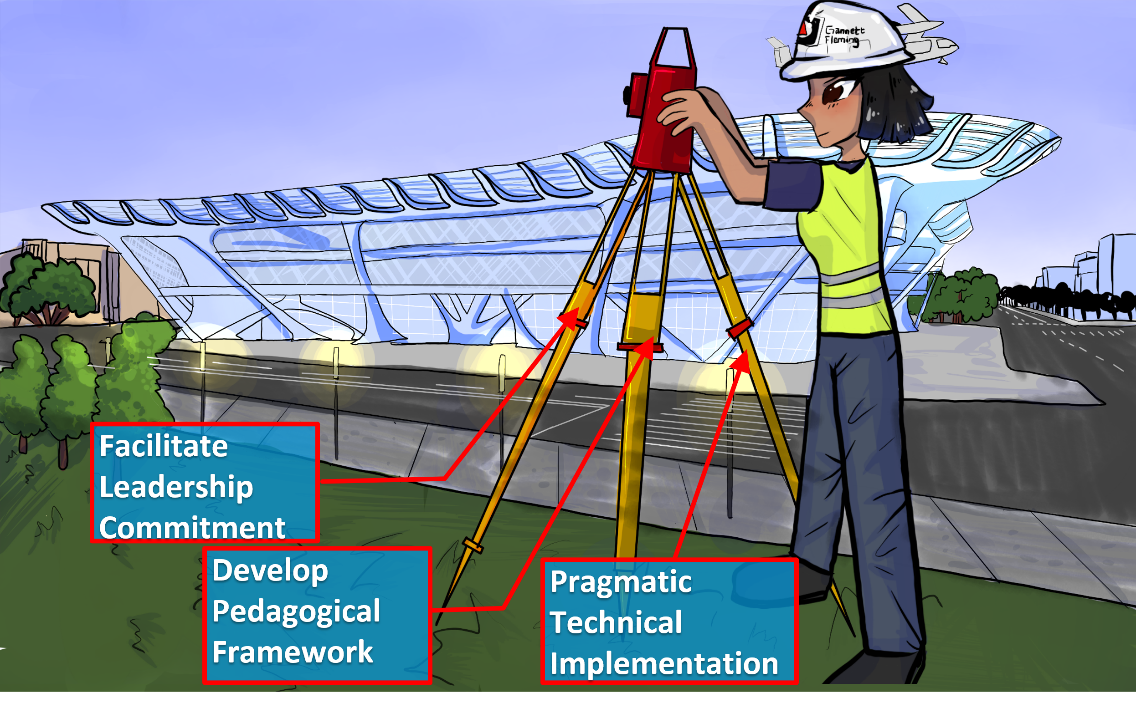
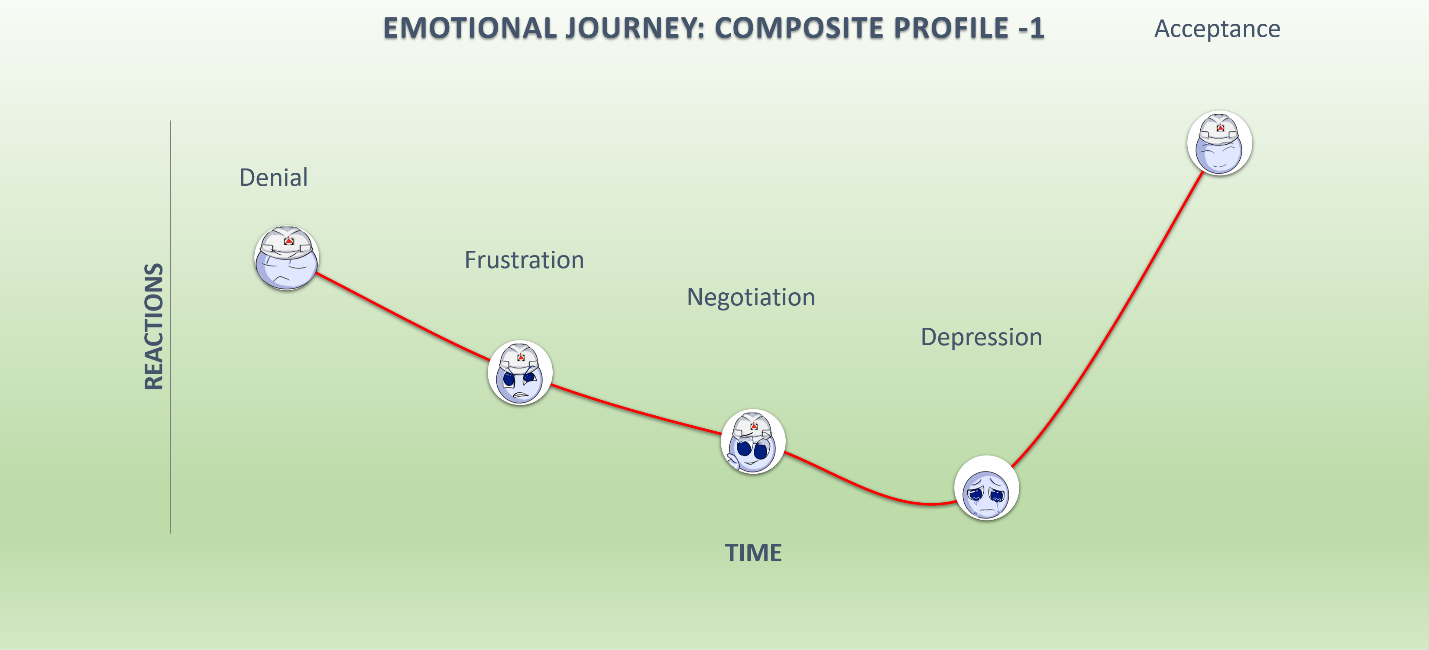
Moving from a MicroStation to a Civil 3D platform is a shift. We will review the data presented to senior leadership, arming them with information to make the switch. Not all projects are equal; hence, we will discuss the types of projects that are suitable for the change. Equally, teaching data management, BIM principles, and Civil 3D is key to a successful platform migration. We will cover the pedagogical theory and techniques used to empower users with new skills. We will consider key strategies to facilitate this shift across different offices in the United States. Data is central to a Civil 3D project. We will examine the data management tools and techniques used to make the learning curve less steep. This will include types of data that are typically necessary for a design project with Civil 3D. In this talk, we will consider how data was created, managed, and shared in Civil 3D 2019/20. Finally, we will review a few technical and non-technical challenges encountered while making the shift.
#PlatformMigration #BIMPrinciples #DataManagement #digitaltransformation #PedagogicalTechniques #TechnicalSkills #ProjectManagementStrategies #ComputationalDesign #ResilientSystems #DesignEfficiency #SystemsApproach #EngineeringSolutions #InnovativeDesign #TechnologyInDesign #ExternalForcesResponse #SystemOptimization #BIMAdoption #ai #machinelearning #Education #DataStandardization #OpenSourceInBIM #SustainableInfrastructure #InformationModeling #EngineeringInnovation #EverydayInnovators #AEC #Innovation #CollectiveCreativity #InnovationMindset #Empathy #LearningJourney #RedefiningInnovation #DigitalTwins #EngineeringInnovation #VirtualModels #QualityManagement #DigitalEngineering #gcp #openai
Gannett Fleming, Autodesk, Bentley Systems Esri, Google
 Infrastructure Tales