So the day, July 23, is finally here. More than 200 bicyclists set out on a 550+ mile ride as we raise funds for cancer research. Sharing a few pictures here:


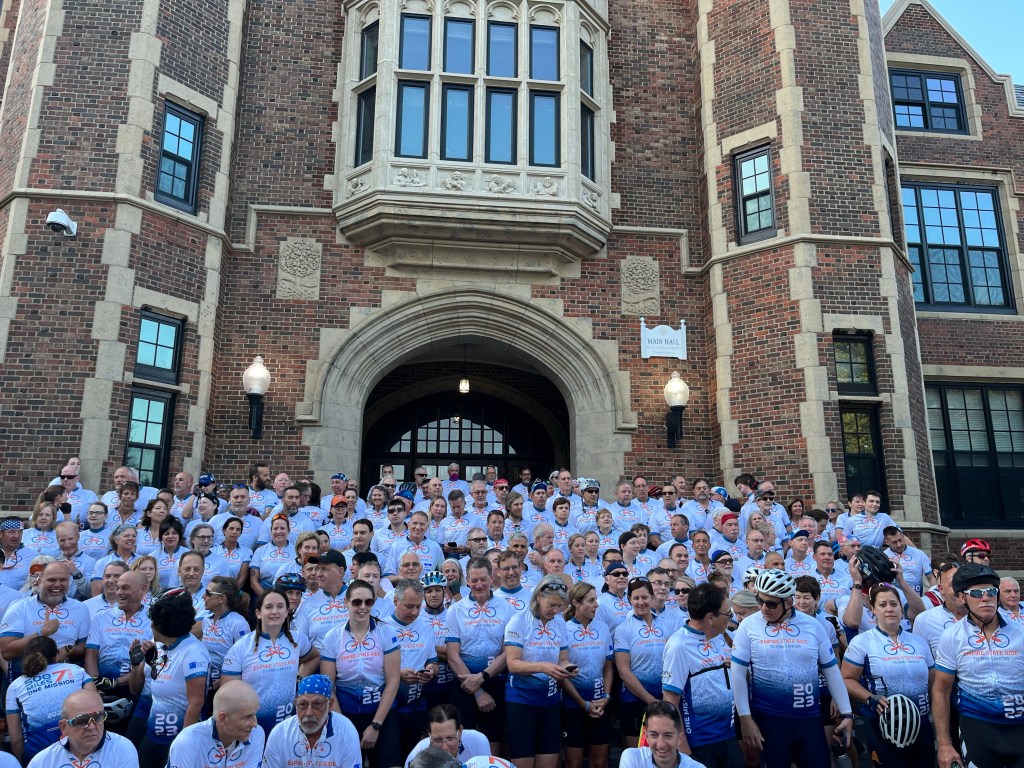
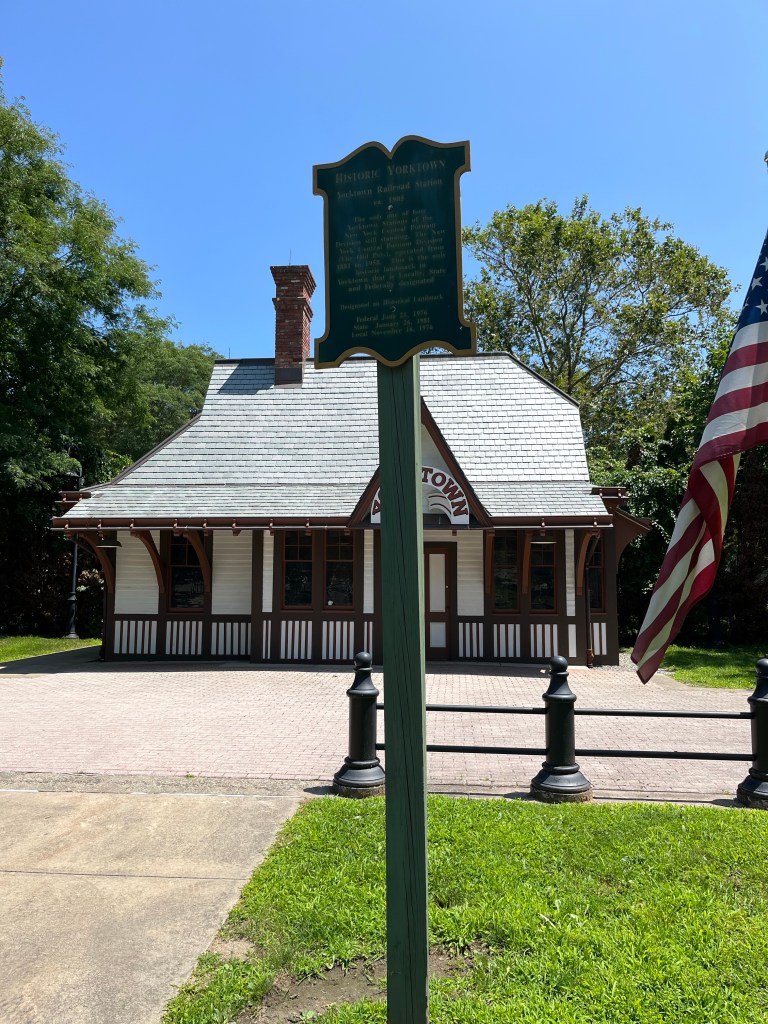


So the day, July 23, is finally here. More than 200 bicyclists set out on a 550+ mile ride as we raise funds for cancer research. Sharing a few pictures here:
June 24, 2023
“You don’t lose because you are knocked out. You lose because you remain knocked out.” Mohammed Ali
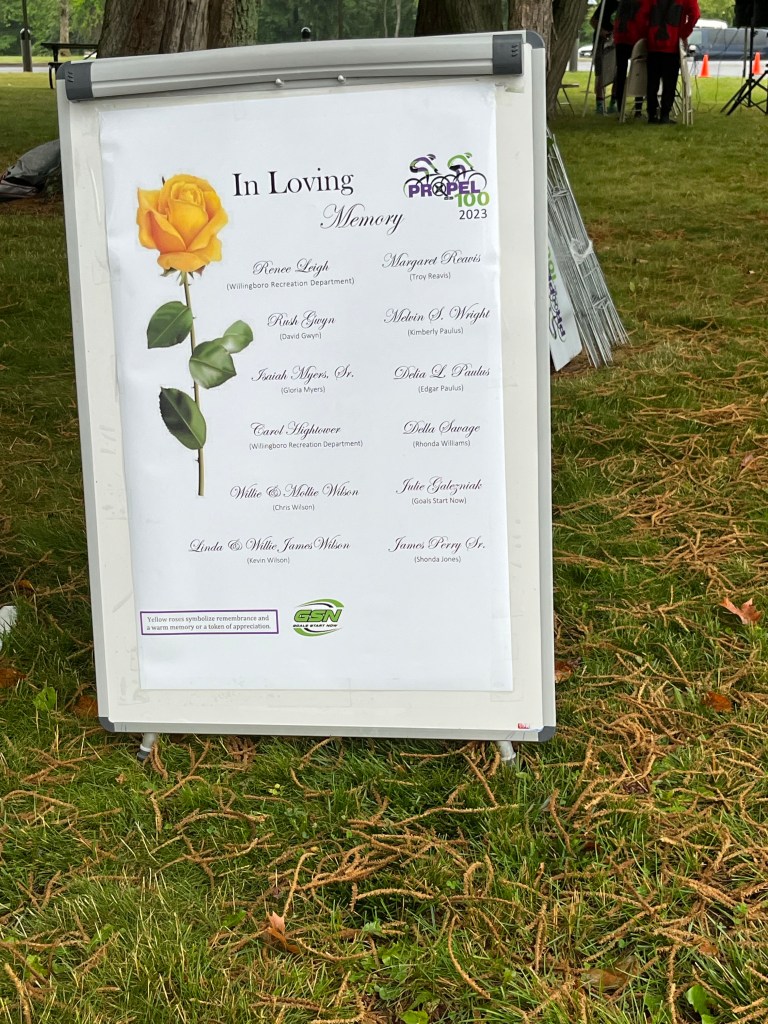
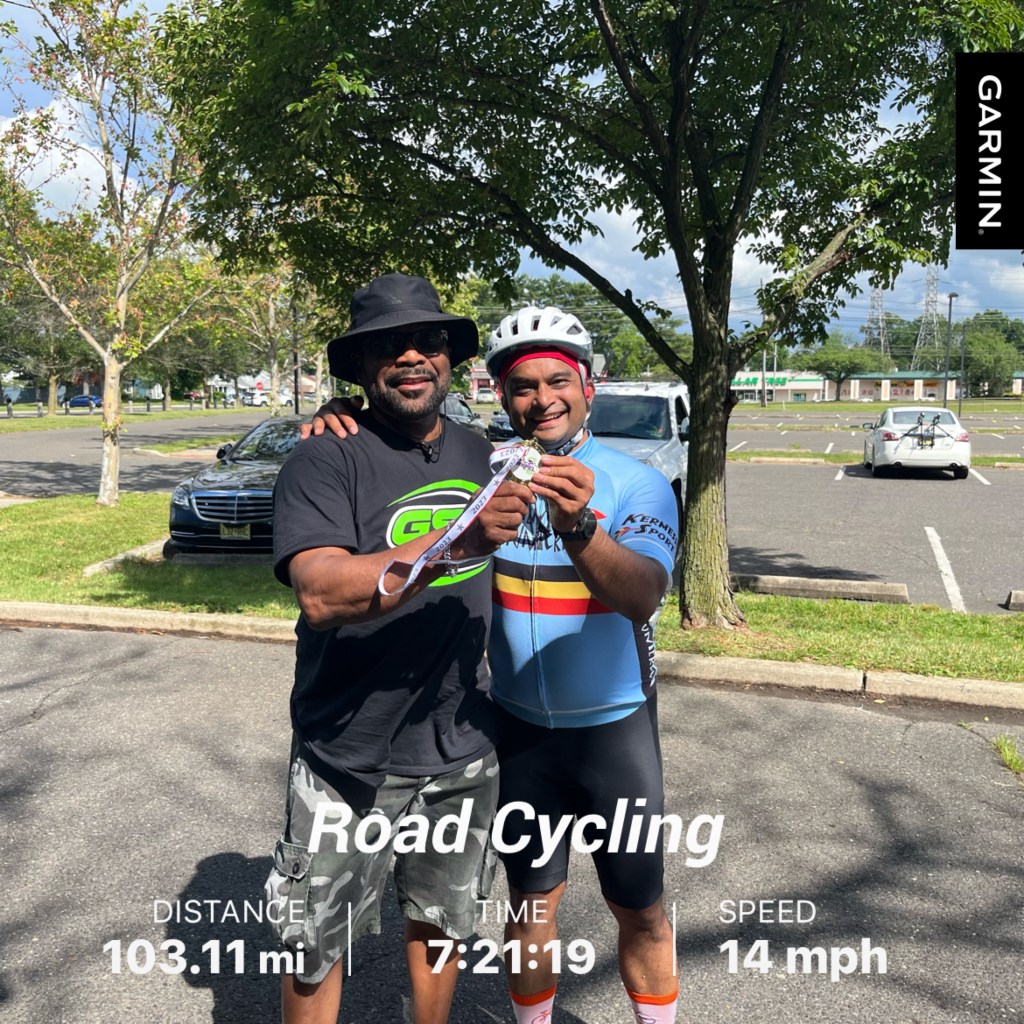
I signed up for the Propel 100. 2023 ride as a practice century ride for the ESR23 ride. I got a flat within the first couple of miles, got lost about five times, but I completed 103 miles. My part was easy thanks to the amazing support and encouragement of the organizers! We stand on the shoulders of giants!
This article is about the concept of Digital Twins and how they relate to engineering work products. It explains how Digital Twins can be used to create a virtual representation of assets and processes, such as models and plans, that are used in engineering, construction, operations, and maintenance processes. It also explains how to use the iTwin platform, Bentley Systems’ implementation of Digital Twins, to create a virtual representation of assets and processes.
Check out my article published in the Civil + Structural Magazine
#digitaltwins #itwins #digitaldelivery #aec #infrastructure #MALD #qualitycontrol #qaqc
Autodesk 2020, Class ID: 467447 Anand Stephen, CME, PE Gannett Fleming
This post provides a synopsis of Anand’s Industry Talk scheduled at the 2020 Autodesk University. It charts our journey, at Gannett Fleming, moving from MicroStation to Civil 3D. In essence, it is a paradigm shift: from 2D Drawing Centric to a 3D Model Centric Approach. He recounts our digital transformation story by focusing our two hidden gems: (1) our people and (2) our data.
A paradigm shift entails changing theoretical perspectives and adjusting practices accordingly. Imagine the effort involved in convincing astronomers to change their view from a geocentric to a heliocentric planetary model. From Thomas Kuhn’s text, The Structure of Scientific revolutions, work, societies resist paradigm shifts. Further, Kuhn informs us that a new paradigm overcomes friction and becomes the dominant paradigm with time.
Outlined in the talk are strategies that helped us overcome friction due to the paradigm shift. Notably, before implementing these strategies, we ensured an empathetic environment where we considered and addressed several perspectives from multiple vantage points.
We took a three-pronged approach to navigate the paradigm shift successfully. A surveying instrument is a useful metaphor to consider. For a surveying instrument to work with precision, we must pay attention to the tripod’s three legs. Similarly, we paid attention to three facets necessary to enable the change from a 2D-Drawing Centric (2DDC) to 3D-Model Centric (3DMC) Approach: (1) Facilitate Leadership Commitment, (2) Develop a cohesive educational framework, and (3) Pragmatic Technical Implementation.
From Business Leaders’ vantage point, an organization facing competing pressures of current needs and future goals. Making a conscious paradigm shift requires an exact blueprint. Like any well-crafted map, the roadmap should identify potential routes and obstacles along the way to the destination. It should include a comparison of current and future paradigms. It is critical to provide business leaders a blueprint to make decisions balancing current and future needs.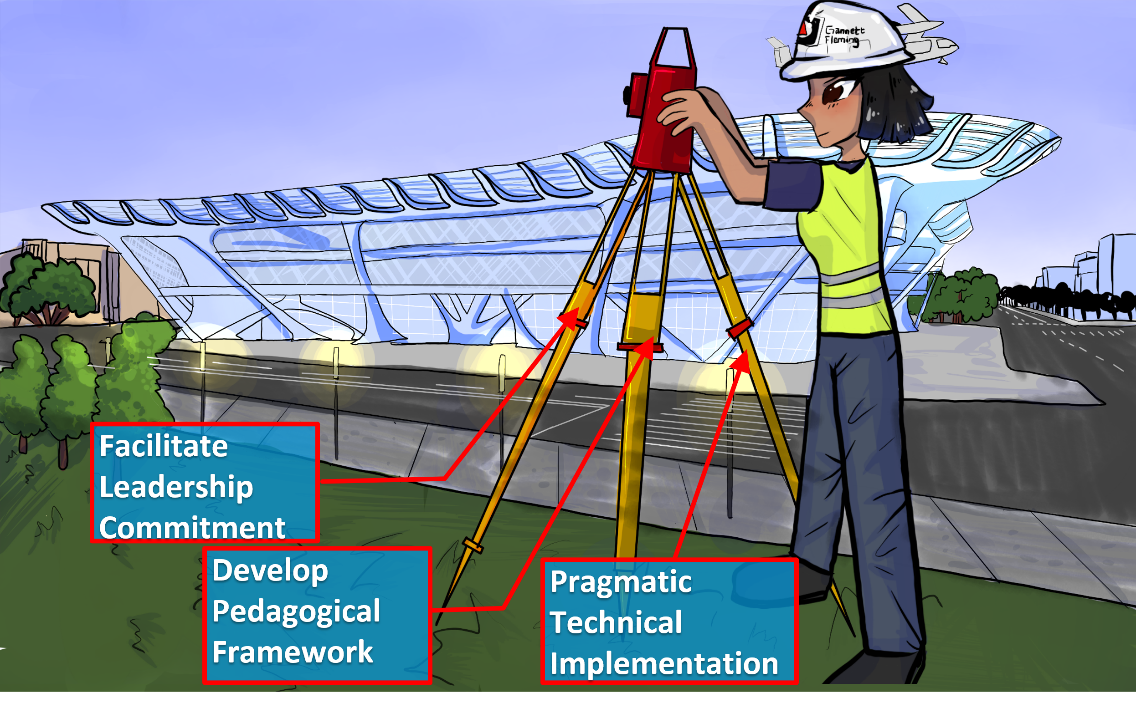
Comparing the two paradigms allows Business Leaders to see how different processes impact current business needs and future goals. Further, a Decision Matrix located various tasks in four quadrants based on effort, reward, and priority. It provides additional detail to the roadmap on how a firm could accomplish different tasks. These crucial data points give the leaders a roadmap, which empowers them to make the best decision.
Technological change is inherently an angst producing activity. Hence, acknowledging human emotions is essential to adopt change effectively while maintaining productivity. Creating an empathetic milieu was necessary for the journey since many change adopters were in different locales. Finally, importantly, it aligns well with our work culture at Gannett Fleming. 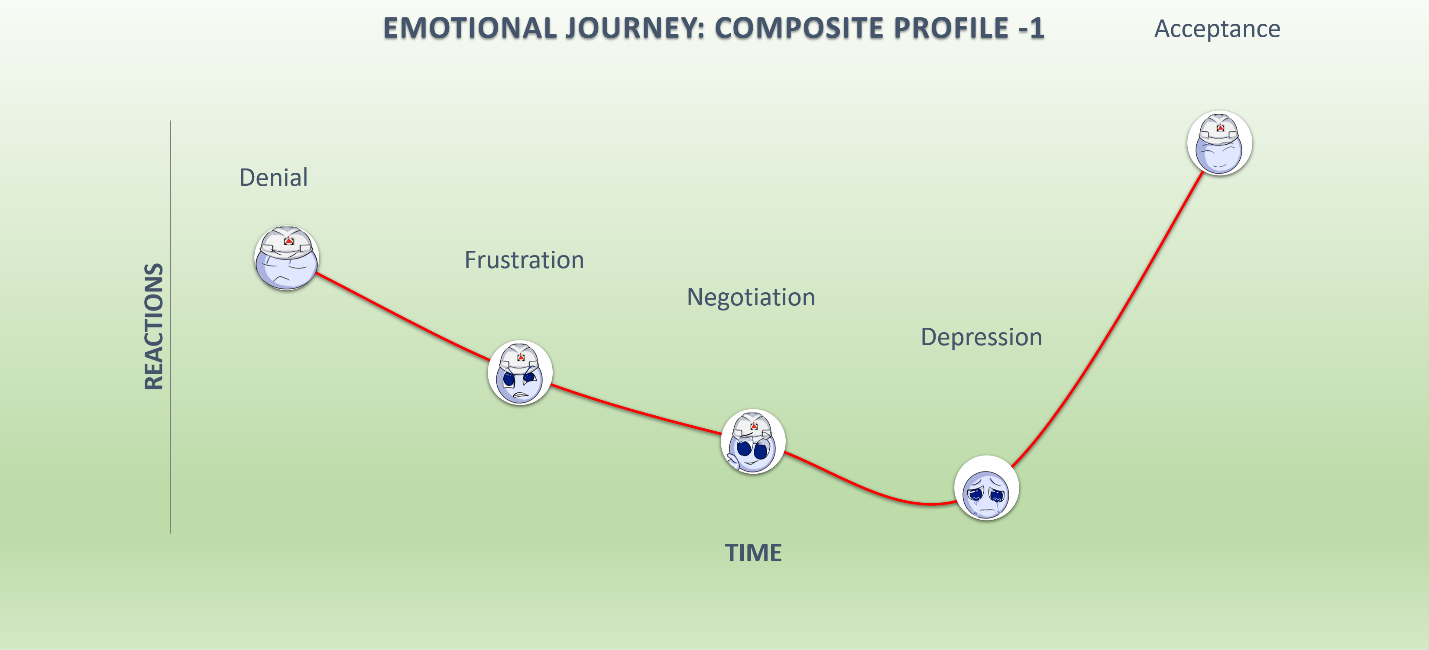
The critical point is that it is unwarranted to accept every opinion. However, it is essential to respond to various perspectives. We responded to concerns by relying on data, research, and best management practices recommended by Autodesk.
Early in our journey, we realized that a single pedagogical approach would not work for our diverse group. Our team members brought varied skill levels and had different ways to process and learn new knowledge. Moreover, listening to our peers confirmed that we needed to formulate a pedagogical approach that maps educational methods and abilities.
Creating a cohesive educational framework within an empathetic environment has significant advantages. From a functional perspective, a coherent educational framework reduces friction due to the shifting of paradigms. It makes upskilling a smoother process. Any change, let alone acquiring skills to adapt to that change, is a fraught process for people. Hence, for an efficient paradigm shift, we should create a coherent educational framework within an empathetic environment. It enables the teams to hear and react to various users’ perspectives.
A pragmatic technical approach is crucial in moving from a 2DDC to a 3DMC system. It is one of the three legs of the tripod essential for empowering the paradigm shift. The operative word is “pragmatic.” We do not live in a world with unlimited resources.
We establish a practical technical approach by adhering to foundational data management concepts from Information Systems Design and following a practical approach towards content creation. The two are not mutually exclusive.
In Information Systems design and theory, a Single Source of Truth (SSoT) refers to organizing data and metadata to avoid data redundancy. Every data element is stored exactly once. By avoiding data duplication, SSoT ensures data consistency. In a 2DDC approach, often, there are multiple sources of truth. For example, designed grades are noted in a design file and subsequently copied over to the sheet files. The potential for data duplication creeps into the project. The problems associated with data duplication increase exponentially with project size.
Data Encapsulation is the concept that extends the SSoT concept. The internal structure and representation of the data are hidden from sources consuming the data. Following data encapsulation, you can organize data by user roles.
In the Industry Talk, Anand recounts our journey of moving from one paradigm to another using Civil 3D; it is a story of changing our peers’ theory and practice. The three strategies that our story rests on are: (1) facilitating leadership commitment, (2) formulate an educational framework, and (3) implementing a pragmatic technical approach. Importantly, before embarking on the paradigm shift, we ensured to foster an empathetic environment — where we considered and addressed change adopters’ perspectives. Understanding the views of our peers helps reduce friction that paradigm shifts typically encounter.
1 Kuhn TS. 1962. The Structure of Scientific Revolutions: 50th Anniversary Edition.
2 Oswald AJ et al. 2015. Happiness and productivity. J Labor Econ University of Chicago Press Chicago, IL. 33:789–822.
3 Achor S. 2011. The Happiness Dividend. Harv. Bus. Rev.
Previously, I wrote about my long-term view of increasing BIM adoption for horizontal infrastructure projects here – https://wp.me/p4bwDs-1p. Today, I share a brief demonstration of the potential of automation. See below, some of the ways we are leveraging technology at #GannettFleming to build a better environment.
Leverage is a concept taken for granted in contemporary engineering. The word itself has its origins from the dawn of the First Industrial Revolution. In its literal and figurative sense, the leverage has come to denote accomplishing tasks with fewer resource inputs. For those following the state of infrastructure, the infrastructure deficit and deferred maintenance is no surprise. Infrastructure forms the basis of any society’s economy. Yet, nations dedicate a minuscule proportion of its GDP towards its infrastructure. Increasing the budget is an obvious solution; however, it is a fraught political process. How do we begin to make a dent in the additional infrastructure needed and reduce deferred maintenance? Taking a long-term view, I will address a few points in this post. By using technologies, we can leverage our resources to make a dent in the infrastructure gaps. But first, we need to increase the adoption of technologies.
Civil Engineering education consists of learning a wide variety of subjects. It ranges from understanding biological processes in environmental engineering to understanding the tensile strength of steel in structural engineering. Most of the education, however, is theoretically oriented. Undoubtedly, it is crucial as, without theory, there is no science.
Big data is a snazzy term these days, particularly in the software realm. But if we pause to think about it, Civil Engineering as a discipline has been dealing with monumental amounts of data to design and construct most of the current infrastructure for hundreds of years. Imagine the data processed by engineers to build the magnificent US Interstate Highway System. In that sense, Civil Engineers were pioneers in data management.
With increased digitization, data management has become a discipline by itself. However, current civil engineering education does not provide sufficient instruction for Information Modeling. Educational institutions, practicing engineers, and professional associations should lay the grounds for improved understanding of data-driven design and construction. It does not merely mean showing students how to use software tools such as Revit, Civil 3D, or Open Roads.
We must move beyond an understanding of tools and encourage students to connect theories they learn with data representing the built environment. Not all data are useful. Engineering education associated with Information Modeling will provide students opportunities to process data. They will undoubtedly learn how to use modern tools along the way. Creating, managing, and processing data becomes second nature to students. Analogously, data will become like words, and BIM tools will be akin to word processors for students. Combining Information Modeling education with engineering education could leverage our resources by putting infrastructure data to work.
A plethora of data describes the existing infrastructure. However, data are archived in dusty file cabinets. Or they are housed on legacy file servers, remaining siloed and inert. We must think creatively to bring these data out of the silos to activate them.
In the software realm, several open-source initiatives have driven innovative solutions. For example, the Apache foundation, over the past two decades, has hosted thousands of projects. Sun Microsystems, Google, and other software firms embrace the open-source movement to drive innovation and create new content.
Opensource platforms attract new talent to dabble in producing code or content. It provides an avenue for new user groups to learn and become proficient in software tools. Further, it is an avenue to convert siloed data into useful data.
Currently, as an industry, we predominately use LandXML and GeoJSON to exchange data and collaborate between different platforms. Industry standards such as LandXML and GeoJSON are just the tip of the iceberg in terms of standardization of civil infrastructure digital data.
Imagine a standardization of roadway design data. While the same materials may be used in the design and construction of roads crossing New York and New Jersey, the standards used generate the plans are different. For the end-user, all things being equal, at state borders, the pavement looks the same. However, the construction plans in either state most likely follow different standards. A standardization data exchange would leverage existing tools and data to build a better environment ultimately.
It is no secret that Civil Engineers must maintain and transform the built environment with limited resources. Socio-political campaigns to increase financial infrastructure support are essential. However, as professionals, we must find various ways to leverage existing resources to accomplish the needs of our society. In this post, taking a long-term view, I identified a few strategies for leveraging existing resources. We need to think of ways to incorporate Information Modeling into the civil engineering education curriculum. Secondly, we need to embrace open-source platforms and philosophies. Finally, as an industry, we need to continue to develop standardization for data exchange.
Anand Stephen (September, 2020)
#aec #designengineers #civil #infrastructure #projects #government #DOT #autodesk #civilinfrastructure #bentleysystems #pedagogy #engineeringexcellence #civil3d #OpenRoads #innovation #bim #construction #aecindustry
This is space where I plan to post about all things related to infrastructure — the underlying structure that enables all facets of contemporary life. It will be a space that focuses on the built environment.
 Infrastructure Tales